

『Air Flow Meter Automotive: Diagnosing Car MAF Sensor Issues』Related information(flow rotameter|digital flow meter|balo meter|hydraulic flow meter|volumetric meter|positive displacement meter|pitot tube flow meter|displacement meter|cfm meter|variable area flow meter|inline flow meter|differential pressure flow meter|calibrated flow meter|velocity meter|paddle wheel flow meter|oval gear flow meter|anemometer hvac|multiphase flow meter|doppler flow meter|thorpe tube flowmeter|heat flow meter)
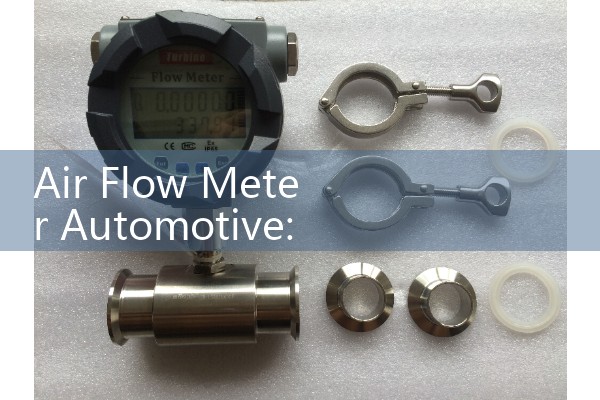
Air Flow Meter Automotive: Diagnosing Car MAF Sensor Issues
Quick Answer: A dirty or failing mass air flow (MAF) sensor will cause rough idle, black smoke, and poor fuel economy. Most diagnostics start with reading the live grams per second (g/s) value at idle and at 2,500 rpm using a scan tool. If the readings deviate more than 3 g/s from spec, clean the sensor with MAF cleaner first before spending on a new Denso or Bosch unit.
What a MAF Sensor Does in Your Engine
The MAF sensor sits right behind the air filter housing. It measures the mass of intake air entering the engine. A hot wire or hot film element inside the sensor is kept at a constant temperature. The engine control unit (ECU) uses this signal to calculate the correct fuel injection pulse width. On a Toyota 1KD-FTV diesel engine, a common Hilux and Prado engine in Southeast Asia, the MAF sends a voltage signal between 0.5 and 4.5 V. At idle you expect 0.8 to 1.2 V. At full load it climbs toward 4.0 V. The ECU cross-checks this with the manifold absolute pressure (MAP) sensor and intake air temperature (IAT) sensor.
Common Symptoms of a Dirty or Failing MAF
Here is the thing. Most drivers notice a hesitation when accelerating from 60 km/h to 100 km/h. A paint manufacturer in Indonesia had a fleet of diesel pickups used for daily chemical deliveries. Three of the five trucks showed black smoke during hard acceleration and the DTC P0101 code. That points to a MAF performance problem. Other symptoms include unstable idle between 600 and 900 rpm, hard starting when the engine is hot, and a 15% to 25% increase in fuel consumption. In practice, a clogged MAF often still reports values, but they are lower than actual airflow. The ECU then injects less fuel, which creates a lean condition and triggers the check engine light.
Step-by-Step Diagnosis with a Scan Tool and Multimeter
Do this with the engine fully warmed up and all electrical loads off. Connect a scan tool and read the MAF value in g/s. At idle a 2.5-liter diesel should show 4 to 7 g/s. Snap the throttle to 2,500 rpm and hold it. The MAF reading should jump to 18 to 22 g/s. If the number sits at 3 g/s at idle and stays flat or drops when you rev, the sensor is contaminated or dead. Many mechanics skip the multimeter step. Do not skip it. Back-probe the MAF signal wire with a meter set to DC volts. With the key on and engine off, you should see 0.3 to 0.7 V. With the engine running, the voltage should rise smoothly with rpm. A constant 1.6 V at all speeds means the sensor has failed internally. Also check the intake air hose for tears after the MAF. Unmetered air fools the ECU and triggers P0101 even with a good sensor.
Cleaning vs. Replacing the MAF Sensor
Remove the MAF carefully. Do not touch the hot wire element with your fingers. Spray it with a dedicated MAF cleaner from CRC or Liqui Moly. Never use brake cleaner or carb cleaner. Those leave a residue that destroys
Why This Matters for Industrial Gas Measurement
The hot wire principle inside a MAF sensor is the same thermal dispersion technology used in industrial thermal mass flow meters. At Silver Instruments we build inline and insertion thermal flow meters for compressed air, natural gas, and biogas. These meters are sized for DN15 to DN200 pipes and operate in ATEX Zone 1 areas when required. Instead of reading g/s for a 3.0-liter engine, our meters read kg/h or Nm³/h for plant-wide air audits. The sensor element is PT100-based, and the 4-20 mA HART output integrates directly into your PLC or SCADA. If you run a food drying line in Nigeria or a biogas digester in Vietnam, direct mass flow measurement without pressure and temperature compensation saves you hours of manual data correction.
Send us your pressure (bar), temperature (°C), pipe size (DN), and flow range. Email [email protected] or call +86-135-1213-1526. You can also reach us on WhatsApp at 86-135-12131526 or WeChat at +86 13512131526. Our team at Silver Automation Instruments offers same-day quotes for thermal mass flow meters and Coriolis meters.
FAQ
Can I drive with a faulty MAF sensor for a short distance?
You can drive a few kilometers to a workshop. The ECU uses fixed default values, so the engine runs rich and the catalytic converter or DPF may overheat if you drive more than 50 km.
How often should I clean the MAF on a diesel pickup in dusty areas?
Clean it every 20,000 km if you drive on unsealed roads in places like KwaZulu-Natal or Western Australia. Check the air filter more often. A leaking air filter box lets dust bypass and fouls the MAF quickly.
What is a normal MAF reading at idle for a 3.0-liter diesel?
At 750 rpm with no AC load, expect 7 to 9 g/s. If you see 3 g/s, the sensor is underreading and needs immediate attention.
Does cleaning a MAF sensor reset the check engine light?
No. You must clear the DTC with a scan tool after cleaning. The light may go off by itself after three complete drive cycles if the fault is gone, but do not wait for that.
My MAF reading spikes to 35 g/s at idle after replacement. What is wrong?
Most likely the replacement sensor is not calibrated for your ECU or you installed a sensor for a naturally aspirated engine on a turbocharged model. Double-check the OEM part number stamped on the old sensor housing.
 Hot Blog
 Related AD