

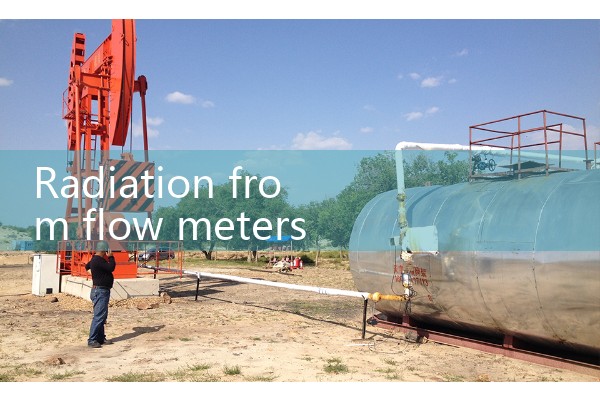
『Flow meter radiation』Related information(flow rotameter|digital flow meter|balo meter|hydraulic flow meter|volumetric meter|positive displacement meter|pitot tube flow meter|displacement meter|cfm meter|variable area flow meter|inline flow meter|differential pressure flow meter|calibrated flow meter|velocity meter|paddle wheel flow meter|oval gear flow meter|anemometer hvac|multiphase flow meter|doppler flow meter|thorpe tube flowmeter|heat flow meter)
What aspects should be paid attention to when installing a vortex flowmeter?
1: Effective measures should be taken for on-site environment and vibration: The ambient temperature of the vortex flowmeter is -40 ℃ ≤ T ≤ 55 ℃. If it is exposed to thermal radiation from production equipment, insulation and ventilation measures should be taken. Environmental air: Flow meters should not be installed in environments containing corrosive gases. If installation is necessary, ventilation measures must be taken. Mechanical vibration and impact: Vibration can generate interference signals. If the vibration and impact on the pipeline are strong and the medium flow rate is low, it may cause the interference signal to be greater than the flow signal, resulting in measurement hood noise errors. Therefore, the flowmeter should be installed in a place with low vibration and impact, and the installation position should be at a vibration frequency of 5-20Hz. The vibration acceleration should not exceed 1g, otherwise vibration reduction measures should be taken. 2: Installation point and straight pipe section requirements: Within the specified length of the straight pipe section, the inlet and outlet sections of the pipeline should be visually straight, and sensors should be avoided from being installed downstream of regulating valves or semi open gate valves as much as possible. Generally, sensors should not be installed after expanding the pipe. The sensor can be installed vertically, at any angle, but when installed vertically or obliquely, the fluid flow direction should be from bottom to top. The setting of pressure points and measurement points should be outside the sensor 10D, and the temperature measurement should be outsi
2. What interference are ultrasonic flowmeters afraid of?
The interference that ultrasonic flowmeters are most afraid of is mechanical vibration and electromagnetic interference. Mechanical vibration directly affects the measurement accuracy of ultrasonic flow meters. The ultrasonic sensor in the flowmeter is very sensitive to mechanical vibration. For example, if the flow of liquid or gas in a pipeline is unstable, or if the pipeline itself is affected by external vibrations, these vibrations are transmitted through the fluid to the flow meter, causing displacement or deformation of the ultrasonic sensor inside. This physical change causes a change in the propagation time of ultrasound in the fluid, thereby affecting the measurement accuracy of the flowmeter. Electromagnetic interference is also an important factor that ultrasonic flow meters need to prevent. Electromagnetic interference sources can be external radio signals, electromagnetic fields generated by power lines, or electromagnetic radiation generated by internal electronic components of flow meters. These electromagnetic interferences can couple into the electronic system of the flowmeter, causing distortion or misoperation of the measurement signal. For example, strong electromagnetic pulses may cause instantaneous overload of electronic components in flow meters, resulting in data errors or equipment damage. To reduce the impact of these interferences on ultrasonic flow meters, a series of measures can be taken. For the interference of mechanical vibration on the flow meter, it can be reduced by op
 Hot Blog
 Related AD