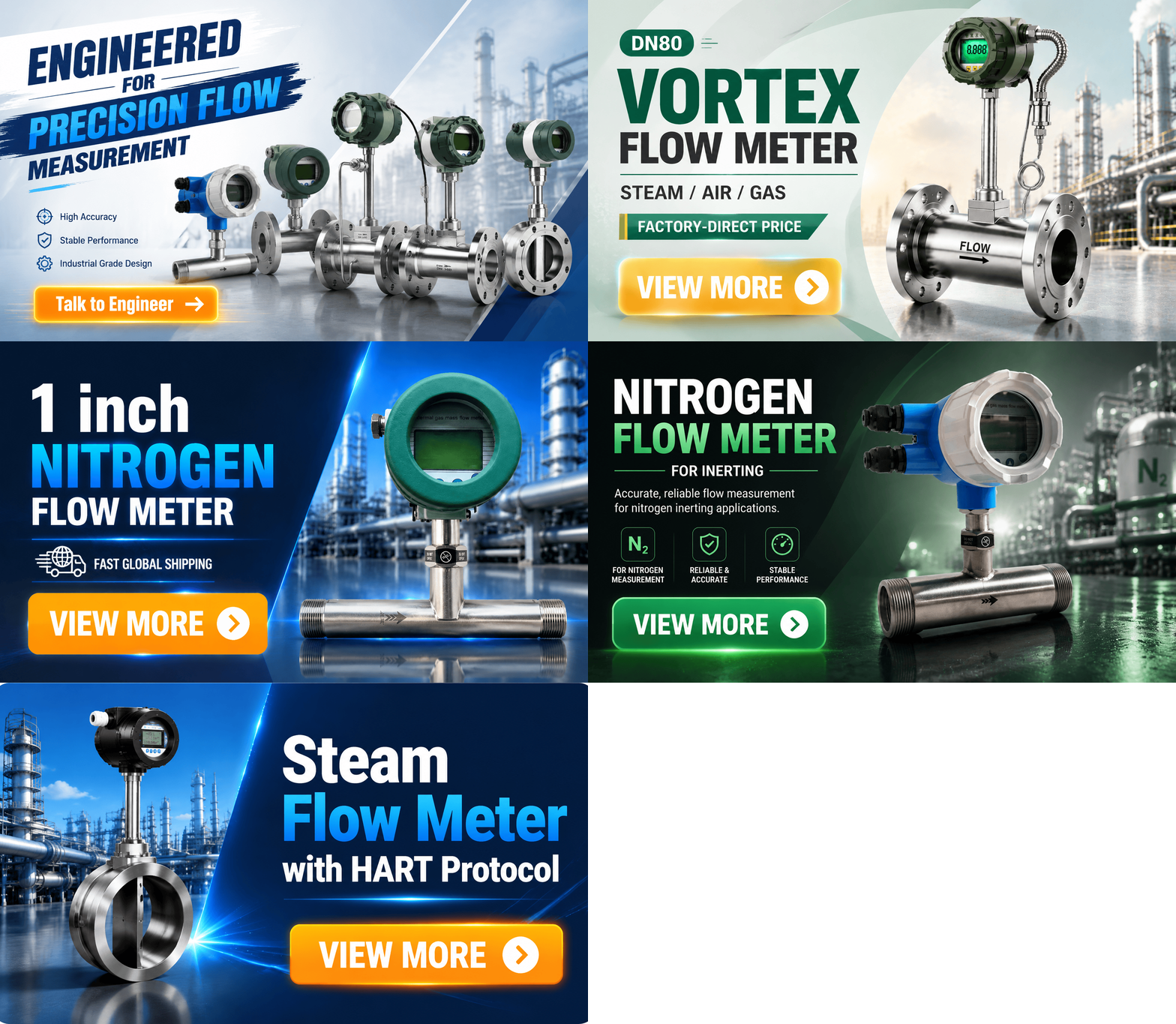


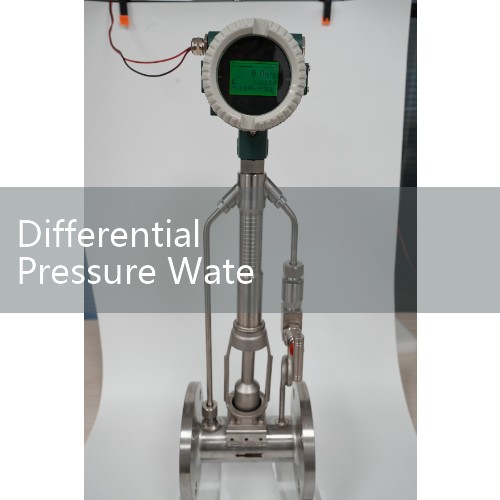
『Differential Pressure Water Flow Meter: Inline Main Pipe Element Sizing』Related information(flow rotameter|digital flow meter|balo meter|hydraulic flow meter|volumetric meter|positive displacement meter|pitot tube flow meter|displacement meter|cfm meter|variable area flow meter|inline flow meter|differential pressure flow meter|calibrated flow meter|velocity meter|paddle wheel flow meter|oval gear flow meter|anemometer hvac|multiphase flow meter|doppler flow meter|thorpe tube flowmeter|heat flow meter)

Differential Pressure Water Flow Meter: Inline Main Pipe Element Sizing
Quick Answer
For water mains from DN50 to DN600, the inline primary element choice depends on straight run, pressure loss, and turndown. Use an orifice plate for clean water with long straight runs. Use a Venturi or averaging pitot tube when space is short or pump energy matters. Send your pipe size, pressure, temperature, and flow range for a direct sizing calculation.
Sizing starts with the pipe and flow range
Here is the thing. Primary element sizing starts with the pipe inner diameter, not the nominal line size. A DN200 schedule 40 pipe has an inner diameter near 202.7 mm. A DN200 schedule 80 pipe has a smaller bore. That difference changes differential pressure by several percent.
Flow range is the second input. You need minimum, normal, and maximum flow in cubic meters per hour. For clean water use 998 kg per cubic meter. For seawater use 1025 kg per cubic meter. If the site measures water at a different temperature, send the correct density.
Element options for water mains
Orifice plates are the most common for clean water. They cost less than other inline elements. A typical orifice plate needs 20D upstream and 10D downstream for good accuracy. Permanent pressure loss can reach 60 to 70 percent of the generated differential. That matters on a DN400 cooling water main that runs all year.
Venturi tubes are longer and cost more. They fit large water mains and desalination plants where pressure loss must stay low. A standard machined Venturi needs about 15D upstream. Permanent pressure loss is often 10 to 15 percent of the differential. An averaging pitot tube is a good insertion option for DN300 and larger pipes. It has lower permanent loss and can be hot tapped without draining the line.
Straight run requirements drive element choice
If you have 20D upstream, an orifice plate works. If the pipe is DN200 and the distance to the nearest elbow is 600 mm, that is only 3D. A standard orifice plate will not meet accuracy expectations. Use a Venturi, a cone element, or an averaging pitot tube with a flow conditioner.
Calculate DP range before you buy the transmitter
The primary element and DP transmitter are one system. Do not pick a 0 to 100 kPa transmitter just because the smart meter can be ranged later. Use the square root relation. At 50 percent flow, the DP falls to 25 percent. At 25 percent flow, the DP falls to 6.25 percent.
Example. A DN200 clean water main with a flange tap orifice plate. Maximum flow is 400 cubic meters per hour. Minimum flow is 100 cubic meters per hour. At 400 cubic meters per hour, the selected bore gives 250 mbar. At 100 cubic meters per hour, the DP drops to 15.6 mbar. A standard DP transmitter can read that but accuracy may drop. For a 10 to 1 turndown, use two transmitters or a high accuracy multivariable DP transmitter.
Where inline main pipe sizing goes wrong
We saw a water treatment plant in Indonesia install a DN300 orifice plate only 4D downstream of a butterfly valve. The flow reading shifted by 8 percent against a portable ultrasonic meter. They moved the element to a straight spool with 18D upstream. The error fell below 1.5 percent. The problem was not the transmitter. It was the installation.
Gas bubbles cause the next common issue. In a horizontal water pipe, mount the pressure taps on the side or below the pipe. Keep impulse lines sloped back to the process so air does not collect. Use a manifold valve for zero checks. In a vertical pipe, confirm the line stays full at all conditions.
Transmitter selection for water service
Silver Instruments supplies a HART differential pressure transmitter for water applications. The model SLDP-3051 covers ranges from 0 to 6 kPa up to 0 to 2 MPa. Accuracy is 0.075 percent of span. The wetted diaphragm is 316L stainless steel standard. For seawater, choose Hastelloy C276 diaphragms. Output is 4-20 mA HART with a local LCD display.
Pair the transmitter with a 3 valve manifold or
A sizing example for a desalination plant
A customer in Oman asked us to size a flow element for a DN250 seawater main. Conditions were 60 to 600 cubic meters per hour, 12 bar, 35 degrees Celsius. We recommended a Venturi tube with a 0 to 300 mbar differential range. The permanent pressure loss is below 30 mbar at maximum flow. The transmitter uses Hastelloy C276 diaphragms and HART output. Accuracy is plus or minus 0.5 percent of rate from 80 cubic meters per hour upward.
This avoided the high pressure loss of an orifice plate. It also reduced algae and fiber clogging because the Venturi has no sharp edge. The installed cost was higher than an orifice plate but pump energy savings repaid the difference in under three years.
Water quality and tap point rules
For clean potable water, a stainless steel orifice plate or averaging pitot tube works. For cooling tower water with scale, use a chemical seal or a regular cleaning schedule. For raw water with silt, a Venturi with an annular chamber resists wear better than a thin orifice plate.
In a horizontal pipe, side taps reduce air trapping. In a vertical pipe, keep the pipe full. Impulse lines should be 10 mm or 12 mm stainless steel tube. Slope the lines at 10 percent back to the process. Keep the transmitter below the pipe for liquid service. This keeps the impulse lines full and stable.
How to order the right inline element and transmitter
Send us the following data: pipe size in DN or inches, pipe schedule or inner diameter, fluid type, pressure in bar, temperature in degrees Celsius, flow range in cubic meters per hour, and available straight run. Tell us the pipe orientation and whether the service is continuous or batch. We will calculate the bore diameter, beta ratio, differential pressure range, and permanent pressure loss.
For a fast quote, contact Silver Instruments on WhatsApp at +86-25-52155837 or call +86-25-68650347. WeChat is +86 15365082610. Tell us your pressure, temperature, pipe size, and flow range. We will return a sizing note with a recommended primary element and DP transmitter model.
FAQ
What inline primary element is best for a DN150 cooling water line with 5D straight run?
An averaging pitot tube or a cone element works better than an orifice plate. A standard orifice plate needs longer straight run, usually 20D upstream. At 5D, add a flow conditioner or use an element that handles profile distortion.
Can I use an orifice plate for seawater?
Yes for clean seawater. Use 316L stainless steel or Hastelloy C276 for the plate and transmitter diaphragm. Schedule cleaning for marine growth. For high pressure recovery and low permanent loss, a Venturi is often the better main pipe element.
Why does my DP water meter read zero at low flow?
The differential pressure is too small. At 10 percent flow, DP is 1 percent of the full range. Transmitter zero drift or a wide span can hide the signal. Check the minimum flow against the element beta ratio before changing the transmitter.
How do you know the DP range for a water line?
The element sizing calculation gives it. Input the pipe inner diameter, flow range, density, and viscosity. For clean water, density at 25 degrees Celsius is 998 kg per cubic meter. The bore or beta ratio is adjusted to set a suitable DP, often 100 mbar to 500 mbar at maximum flow.
Do you supply both the primary element and the DP transmitter?
Yes. Silver Instruments supplies flange tap orifice plates, Venturi tubes, averaging pitot tubes, and the HART DP transmitter. We also provide the manifold valve and remote seals if needed. Send the process data and we will provide a matched set.
 Hot Product
 Related AD