

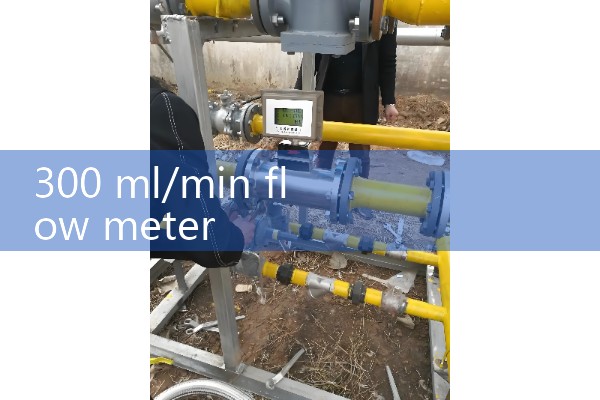
『300 ml/min flow meter』Related information(flow rotameter|digital flow meter|balo meter|hydraulic flow meter|volumetric meter|positive displacement meter|pitot tube flow meter|displacement meter|cfm meter|variable area flow meter|inline flow meter|differential pressure flow meter|calibrated flow meter|velocity meter|paddle wheel flow meter|oval gear flow meter|anemometer hvac|multiphase flow meter|doppler flow meter|thorpe tube flowmeter|heat flow meter)
 Here is an article on 300 ml/min flow meters, covering their types, applications, and selection criteria.
---
### The Precision of Low Flow: A Guide to the 300 ml/min Flow Meter
In the vast world of industrial and laboratory instrumentation, flow meters are the silent sentinels of process control. While massive pipelines carrying thousands of liters per minute capture the imagination, it is often the precise measurement of small, steady flows that proves most critical. The 300 ml/min flow meter is a perfect example of this niche but vital technology. Operating at a rate of 300 milliliters per minute—roughly the volume of a standard soda can every 60 seconds—these devices are essential for applications where accuracy, repeatability, and gentle handling are paramount.
**What is a 300 ml/min Flow Meter?**
A 300 ml/min flow meter is an instrument designed to measure the volumetric flow rate of a fluid (liquid or gas) at a rate of 300 milliliters per minute. This low-flow range presents unique engineering challenges. At such volumes, the fluids viscosity, temperature, and the presence of small gas bubbles (in liquids) can significantly impact measurement accuracy. Consequently, standard flow meter technologies used for high-flow applications are often unsuitable. Instead, specialized technologies are employed to ensure reliable readings.
**Key Technologies for Low-Flow Measurement**
Several technologies excel in the 300 ml/min range, each with distinct advantages.
1. **Thermal Mass Flow Meters:** These are among the most popular choices for low-flow gas measurement. They operate on the principle of heat transfer. A heated element is placed in the flow stream; as gas flows past, it cools the element. The rate of cooli
 Hot Product
 Related AD