

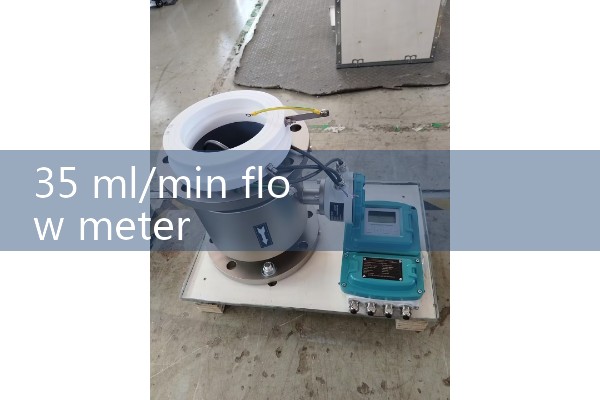
『35 ml/min flow meter』Related information(flow rotameter|digital flow meter|balo meter|hydraulic flow meter|volumetric meter|positive displacement meter|pitot tube flow meter|displacement meter|cfm meter|variable area flow meter|inline flow meter|differential pressure flow meter|calibrated flow meter|velocity meter|paddle wheel flow meter|oval gear flow meter|anemometer hvac|multiphase flow meter|doppler flow meter|thorpe tube flowmeter|heat flow meter)
 **Understanding the 35 ml/min Flow Meter: Precision in Low-Flow Applications**
In the world of fluid measurement and control, accuracy is paramount. Among the many devices designed to monitor and regulate fluid movement, the 35 ml/min flow meter stands out as a specialized instrument for low-flow applications. Whether in laboratory research, medical devices, chemical processing, or environmental monitoring, this flow meter plays a critical role in ensuring precise delivery and measurement of liquids and gases at a relatively low volumetric rate.
A flow meter rated at 35 milliliters per minute (ml/min) is designed to handle flow rates where even minor deviations can lead to significant consequences. This type of meter is commonly used in applications such as pharmaceutical dosing, chromatography, fuel cell testing, and micro-reactor systems, where maintaining a steady and accurate flow is essential for reproducibility and safety.
**How It Works**
The 35 ml/min flow meter can employ various measurement technologies, depending on the fluid properties and application requirements. Common types include thermal mass flow meters, which measure heat transfer from a heated element to the flowing fluid; Coriolis flow meters, which use the principle of inertial forces to directly measure mass flow; and positive displacement meters, which trap and count discrete volumes of fluid. For low-flow applications, thermal sensors are often favored due to their high sensitivity and ability to measure flow without moving parts, reducing wear and maintenance.
**Key Features and Benefits**
One of the primary advantages of using a dedicated 35 ml/min flow meter is its resolution. At such low flow rates, a standard industrial flow meter may
 Hot Product
 Related AD