

『0.09 GPM low flow meter』Related information(flow rotameter|digital flow meter|balo meter|hydraulic flow meter|volumetric meter|positive displacement meter|pitot tube flow meter|displacement meter|cfm meter|variable area flow meter|inline flow meter|differential pressure flow meter|calibrated flow meter|velocity meter|paddle wheel flow meter|oval gear flow meter|anemometer hvac|multiphase flow meter|doppler flow meter|thorpe tube flowmeter|heat flow meter)
 Here is a comprehensive article on the 0.09 GPM low flow meter, written in English.
---
### Precision at the Micro Scale: The Importance of the 0.09 GPM Low Flow Meter
In the world of fluid measurement, flow meters are often associated with large industrial pipelines, massive irrigation systems, or high-volume municipal water supplies. Yet, some of the most critical applications in science, medicine, and manufacturing require the measurement of tiny, almost imperceptible amounts of liquid. This is where the 0.09 GPM (gallons per minute) low flow meter comes into its own. While 0.09 GPM may sound negligible—equivalent to approximately 5.4 gallons per hour or just over 340 milliliters per minute—its accurate measurement is vital for precision, quality control, and safety.
First, let us understand what a low flow meter of this capacity actually measures. At this scale, the flow is a slow trickle. Imagine a standard kitchen faucet barely turned on, or a thin stream from a drinking fountain. For many industrial processes, this level of flow represents the difference between success and failure. The challenge lies in the physics: at such low velocities and small volumes, traditional flow measurement technologies—such as simple turbine meters or orifice plates—often struggle. The energy of the flow is too low to reliably spin a rotor, and the pressure drop across a restriction may be negligible. This is why specialized technologies are required.
The most common technologies employed for a 0.09 GPM low flow meter include positive displacement (PD) meters, thermal mass flow meters, and precision electromagnetic meters. Positive displacement meters work like tiny, highly accurate internal gears or pistons. They trap a fixed v
Here is a comprehensive article on the 0.09 GPM low flow meter, written in English.
---
### Precision at the Micro Scale: The Importance of the 0.09 GPM Low Flow Meter
In the world of fluid measurement, flow meters are often associated with large industrial pipelines, massive irrigation systems, or high-volume municipal water supplies. Yet, some of the most critical applications in science, medicine, and manufacturing require the measurement of tiny, almost imperceptible amounts of liquid. This is where the 0.09 GPM (gallons per minute) low flow meter comes into its own. While 0.09 GPM may sound negligible—equivalent to approximately 5.4 gallons per hour or just over 340 milliliters per minute—its accurate measurement is vital for precision, quality control, and safety.
First, let us understand what a low flow meter of this capacity actually measures. At this scale, the flow is a slow trickle. Imagine a standard kitchen faucet barely turned on, or a thin stream from a drinking fountain. For many industrial processes, this level of flow represents the difference between success and failure. The challenge lies in the physics: at such low velocities and small volumes, traditional flow measurement technologies—such as simple turbine meters or orifice plates—often struggle. The energy of the flow is too low to reliably spin a rotor, and the pressure drop across a restriction may be negligible. This is why specialized technologies are required.
The most common technologies employed for a 0.09 GPM low flow meter include positive displacement (PD) meters, thermal mass flow meters, and precision electromagnetic meters. Positive displacement meters work like tiny, highly accurate internal gears or pistons. They trap a fixed v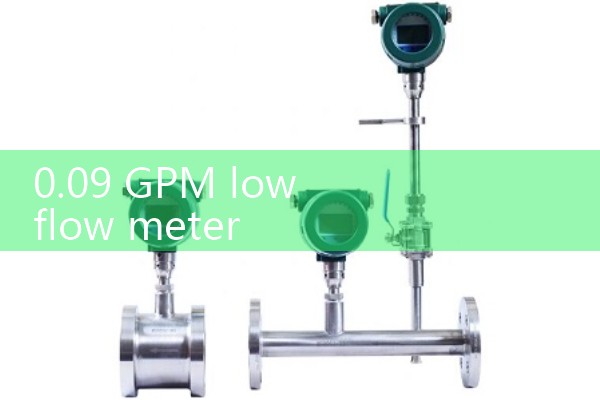
 Hot Product
 Related AD