

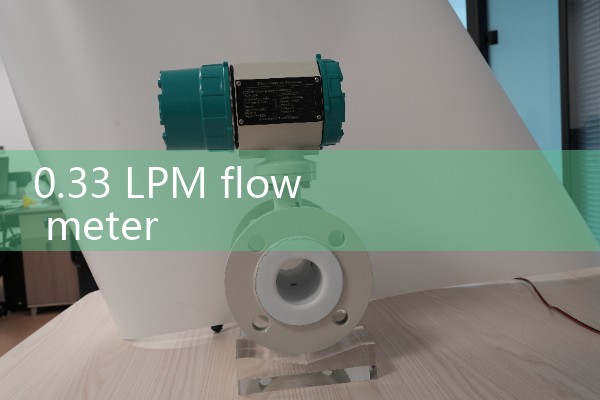
『0.33 LPM flow meter』Related information(flow rotameter|digital flow meter|balo meter|hydraulic flow meter|volumetric meter|positive displacement meter|pitot tube flow meter|displacement meter|cfm meter|variable area flow meter|inline flow meter|differential pressure flow meter|calibrated flow meter|velocity meter|paddle wheel flow meter|oval gear flow meter|anemometer hvac|multiphase flow meter|doppler flow meter|thorpe tube flowmeter|heat flow meter)
 Here is a detailed article about a 0.33 LPM flow meter, written in English.
---
### The Precision of a Drop: Understanding the 0.33 LPM Flow Meter
In the world of fluid dynamics and process control, flow meters are the silent sentinels that ensure systems operate with precision, safety, and efficiency. While industrial giants measure millions of liters per hour, a critical niche exists for low-flow applications where every single drop matters. The **0.33 LPM (Liters Per Minute) flow meter** is a prime example of this specialized instrumentation, a device designed for accuracy at the very margins of flow measurement.
To grasp the significance of 0.33 LPM, consider the scale. One liter per minute is already a modest flow—roughly equivalent to a slow-running faucet. A flow of 0.33 LPM is one-third of that, meaning it takes three full minutes to fill a standard one-liter water bottle. In terms of individual drops, this translates to an incredibly steady and gentle stream. This is not a meter for filling a swimming pool or monitoring a municipal water main; it is a tool for fine, controlled dispensing and sensitive analytical processes.
**The Technology Behind the Measurement**
Measuring such low flows presents unique engineering challenges. Standard turbine or paddlewheel meters struggle at these rates because the fluid lacks the kinetic energy to spin the rotor reliably or overcome bearing friction. Therefore, the 0.33 LPM flow meter typically relies on one of several high-precision technologies.
- **Thermal Mass Flow Meters:** These are perhaps the most common for gas applications at this flow rate. They operate on the principle of heat transfer. A small, heated sensor is placed in the flow stream. As the gas flows
 Hot Product
 Related AD