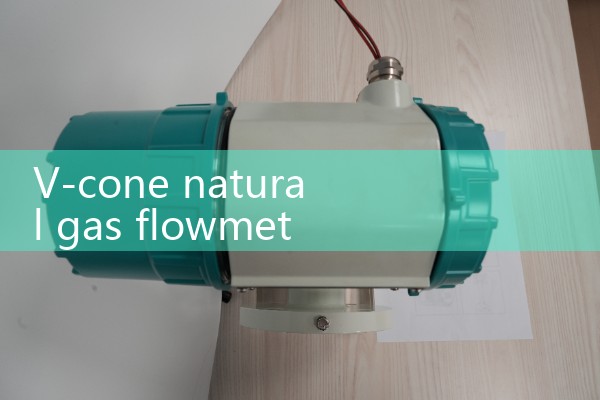
V-shaped cone natural gas flowmeter
Price:¥1.00Quantity:9999
Market Price:¥1.00Reduced Price:¥1.00
Effevtive Time:7/20/2026
Sale Address:SilverProduction Address:Silver automation instruments
Keywords:How to measure the natural gas flow rate in the kiln and what kind of flow meter can be used to solve it? |How to measure the flow rate of natural gas pipelines and hot air pipelines in tunnel kilns Types and Selection of Gas Flowmeters | Rotor|
Phone:QQ:Click:WhatsApp: +86 18936759191
Company:Datong ultrasonic flowmeter manufacturer
『V-shaped cone natural gas flowmeter』Related information(flow rotameter|digital flow meter|balo meter|hydraulic flow meter|volumetric meter|positive displacement meter|pitot tube flow meter|displacement meter|cfm meter|variable area flow meter|inline flow meter|differential pressure flow meter|calibrated flow meter|velocity meter|paddle wheel flow meter|oval gear flow meter|anemometer hvac|multiphase flow meter|doppler flow meter|thorpe tube flowmeter|heat flow meter)
1. Working principle of V-cone flowmeter
The V-cone flowmeter (SKV cone flowmeter) works based on the principle of differential pressure. It changes the flow velocity distribution of the fluid through a cone flow blocking element, forming a stable differential pressure in the pipeline. The flow rate is then calculated by measuring the differential pressure value. The specific working principle is as follows: differential pressure principle and energy conversion. The core of V-cone flowmeter is based on the energy conversion principle in sealed pipelines. For stable fluids, the flow rate is proportional to the square root of the velocity of the medium in the pipeline. When the fluid approaches the cone, the pressure is P1; when passing through the cone interception zone, the flow velocity increases and the pressure decreases to P2. P1 and P2 are led to the differential pressure transmitter through the pressure tap, and when the flow velocity changes, the differential pressure value (Δ P=P1-P2) increases or decreases accordingly, reflecting the change in flow rate. The unique design of the conical flow control element ensures uniform flow velocity: the flow velocity distribution of the conventional differential pressure flowmeter is affected by pipe wall friction, with high central flow velocity and low near wall flow velocity. The cone of the V-cone flowmeter is suspended at the center of the pipeline and directly contacts the high-speed fluid, forcing the high-speed zone to mix with the low-speed zone near the wall, resulting in a more uniform distribution of flow velocity. Even at low flow rates, it is still possible to ensure continuous interaction between the fluid and the highest central flow velocity, res
 ulting in accurate differential pressure. Strong anti-interference ability: Structures such as elbows, valves, and reducers in pipelines can disrupt the flow velocity distribution, leading to measurement errors. The V-cone flowmeter reshapes the upstream flow velocity curve through a cone, and can maintain measurement accuracy even under harsh conditions such as severe flow velocity fluctuations and complex pipeline structures. Differential pressure measurement and flow calculation. Differential pressure signal acquisition: P1 and P2 are led out through the pressure tapping ports before and after the cone, and transmitted to the differential pressure transmitter for conversion into electrical or digital signals. Application of flow formula: The flow calculation formula of V-cone flowmeter is consistent with other differential pressure instruments, usually as follows: $$Q=K cdot sqrt {Delta P/rho} $$, where $Q $is the flow rate, $K $is the instrument coefficient (related to cone geometry and pipeline size), $Delta P $is the differential pressure value, and $rho $is the fluid density. Temperature and pressure compensation: In actual working conditions, fluid density may vary with temperature and pressure, and measurement results need to be corrected through compensation algorithms to ensure accuracy. Adaptability of Ideal Flow State to Real Space Operating Conditions Performance under Ideal Flow State: In the ideal flow state (with no interference and uniform flow velocity), conventional differential pressure instruments can accurately measure, but it is difficult to achieve in reality. The V-cone flowmeter uses cone design to actively intervene in flow velocity distribution, simulate ideal operating conditions, and reduce
『SILVER Official Website SERVICE』



 Hot Product
 Related AD