

『Difference Between Flow Meter and Water Meter: Industrial Flowrate vs Utility Sizing』Related information(flow rotameter|digital flow meter|balo meter|hydraulic flow meter|volumetric meter|positive displacement meter|pitot tube flow meter|displacement meter|cfm meter|variable area flow meter|inline flow meter|differential pressure flow meter|calibrated flow meter|velocity meter|paddle wheel flow meter|oval gear flow meter|anemometer hvac|multiphase flow meter|doppler flow meter|thorpe tube flowmeter|heat flow meter)
Difference Between Flow Meter and Water Meter: Industrial Flowrate vs Utility Sizing
Quick Answer
A flow meter measures industrial flowrate and sends live signals to a PLC or DCS. A water meter counts total volume for utility sizing and billing. For chemical dosing, batching, steam control, or custody transfer, use an industrial flow meter, not a utility water meter.
What a Flow Meter Does in an Industrial Process
On a process line, a flow meter gives live data to an operator or control system. A Coriolis mass flow meter from Silver Automation Instruments can measure kg/h, density, and temperature in one device. An electromagnetic flow meter measures conductive liquids from 0.5 µS/cm up to slurries and sludge. These instruments often use 4-20 mA HART, pulse, or RS485 Modbus outputs.
In practice, a plant in Vietnam uses two electromagnetic flow meters on a chemical dilution skid. One meter controls raw water at DN50, the other controls caustic flow at DN25. The PLC receives 4-20 mA signals from both meters and adjusts a dosing pump.
What a Water Meter Does in Utility Service
A water meter usually sits at the property boundary or inside a building. It counts total cubic meters or liters for billing. Common residential and commercial water meters have brass or plastic bodies, mechanical registers, and no analog output. Sizes like DN15, DN20, and DN25 dominate.
Some advanced utility meters include pulse outputs or radio reading, but accuracy and pressure limits are lower than industrial devices. A water meter works well for clean water at 0 to 50 °C and pressures under 10 bar. It is not made for chemical compatibility, high solids, or fast control loops.
Key Technical Differences That Matter on Site
Industrial flow meters have higher accuracy. An electromagnetic flow meter from Silver Automation Instruments offers 0.5% of reading or better, with options for 0.2%. A utility water meter often has accuracy from 1% to 5% depending on flowrate and age. In custody transfer or batch dosing, a 2% error changes cost per ton, additive ratio, or waste treatment compliance.
Output signals separate the two categories. A flow meter transmits 4-20 mA HART, pulse, frequency, or RS485 Modbus. That data goes to a PLC, DCS, or energy management system. A water meter gives a local total or simple pulse. That output does not support PID control, flow totalizing on an HMI, or remote diagnostics.
Process conditions differ. Industrial flow meters handle high temperature, high pressure, aggressive fluids, and hazardous areas. You can get PTFE lining, 316L electrodes, or ATEX Zone 1 certification. Utility water meters are designed for clean water at low pressure. They may fail fast on acid, seawater, hot condensate, or fluids with solids.
Pipe Size and Installation: Utility Sizing Is Not Industrial Sizing
Here is the thing, utility sizing starts with DN15 to DN50 and focuses on peak household or building demand. Most engineers skip this part and size a flow meter by line size on
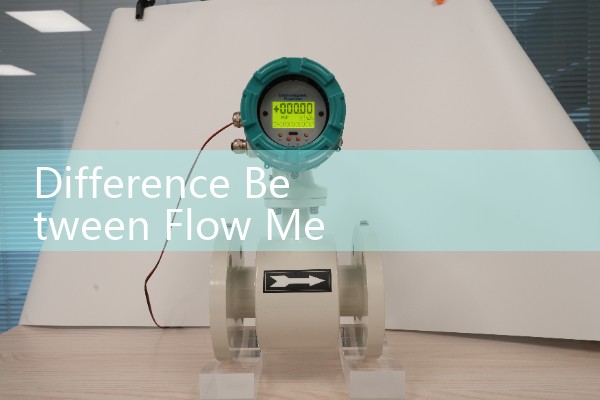
For example, a desalination plant in Saudi Arabia needs a seawater flow meter for DN300 high pressure feed lines. The meter must handle 45 °C seawater, 40 bar pressure, and high salinity. A utility water meter cannot survive that service. Silver Automation Instruments can supply electromagnetic flow meters with rubber or PTFE liners for these lines. Send us pipe size, flow range, pressure, temperature, and fluid type.
Recommended Flow Meter Types for Industrial Applications
For clean water and wastewater, an electromagnetic flow meter is the standard choice. It works on conductive liquids and comes in sizes from DN10 to DN2000. For diesel, fuel oil, or high viscosity fluids, an oval gear flow meter or Coriolis mass flow meter fits better.
A paint manufacturer in Indonesia needed to measure solvent flow at 120 cP. We supplied an oval gear flow meter with a pulse output. The meter now sends data to a batching PLC. For steam and compressed air, a vortex flow meter works well with temperature and pressure compensation. Thermal mass flow meters suit biogas, flue gas, and aeration air in food and beverage plants.
FAQ: Five Questions Engineers Ask Before Buying
Can I use a water meter for industrial flow control? No. A water meter is for totalized billing volume. It lacks analog output, fast response, and process connections for aggressive fluids. Use an electromagnetic or Coriolis flow meter for control.
What accuracy can I expect from an industrial flow meter? Electromagnetic meters typically reach 0.5% of reading. Coriolis meters reach 0.1% to 0.2% of reading for mass flow. Utility water meters often operate from 1% to 5% depending on flowrate.
Which flow meter is best for wastewater with solids? An electromagnetic flow meter with a PTFE or rubber liner and 316L electrodes handles wastewater, sludge, and slurries. Avoid mechanical water meters because solids wear the internals.
Does Silver Automation Instruments supply water meters for building billing? Yes, we can supply industrial grade totalizing meters with pulse or Modbus outputs for district water and building management. Ask us for a quote with pipe size and billing cycle.
What information should I send for a fast quote? Send fluid type, pipe size DN, flow range in m3/h or kg/h, pressure in bar, temperature in °C, conductivity in µS/cm, and output signal preference.
Contact Silver Automation Instruments
For a quote on electromagnetic, Coriolis, vortex, oval gear, ultrasonic, or thermal mass flow meters, contact Silver Automation Instruments.
Tel: +86-25-68650347
WhatsApp: +86-25-52155837
WeChat: +86 15365082610
Website: flow-meter.com.au
Send us your pipe size, flow range, pressure, temperature, and fluid type. We reply with model selection and price.
 Hot News
 Related AD