

『Arag Orion 2 Flow Meter: Electromagnetic Agricultural Chemical Control Valves』Related information(flow rotameter|digital flow meter|balo meter|hydraulic flow meter|volumetric meter|positive displacement meter|pitot tube flow meter|displacement meter|cfm meter|variable area flow meter|inline flow meter|differential pressure flow meter|calibrated flow meter|velocity meter|paddle wheel flow meter|oval gear flow meter|anemometer hvac|multiphase flow meter|doppler flow meter|thorpe tube flowmeter|heat flow meter)
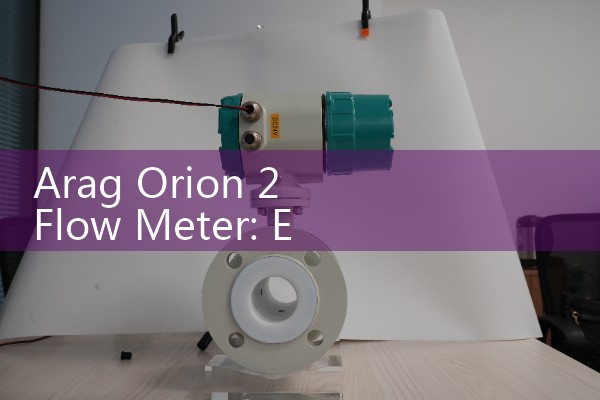
Arag Orion 2 Flow Meter: Electromagnetic Agricultural Chemical Control Valves
Quick Answer: Silver Instruments electromagnetic flow meters replace or supplement an Arag Orion 2 flow meter on agricultural chemical injection, spraying, and fertigation lines. Use a DN15 to DN50 meter with a PTFE liner and 316L electrodes for acids, liquid fertilizers, and pesticides. Send your pipe size, flow range, pressure, and chemical name to get a specific quote.
Why an Electromagnetic Flow Meter Fits Agricultural Chemical Control
Most sprayer flow meters use a paddle wheel or turbine. Those moving parts wear fast when the fluid is not clean water. Liquid fertilizers, phosphoric acid, and some pesticides create scale or sticky films. An electromagnetic flow meter has no moving parts. Nothing inside the pipe blocks the flow. This matters on a 24 VDC sprayer loop where calibration drift is a daily risk.
We have seen this on customer sites many times. A grower runs a cleaning cycle with acid. The turbine meter reads fine for two months. Then the reading jumps, the control valve opens too far, and the chemical dose goes wrong. An electromagnetic meter with a PTFE liner does not have this failure mode.
Arag Orion 2 Flow Meter Common Field Limits
The Arag Orion 2 flow meter is widely used in agricultural sprayers and small chemical control systems. It is compact and easy to mount. But users often ask us for a replacement when the chemical has high conductivity, low flow, or solid particles in suspension. The Orion 2 is a turbine style meter. The rotor can stop if a particle enters the chamber. The signal can drift after exposure to aggressive cleaning agents. On a tomato farm in Saudi Arabia, the control valve was working but the flow signal was unstable at 1.5 L/min. The problem was not the valve. The meter was coated with fertilizer salts.
An electromagnetic flow meter works differently. It measures voltage generated by the fluid passing through a magnetic field. It does not need a rotor. It does not need clear water. It does need a minimum conductivity, typically 5 µS/cm. Most agricultural chemicals have enough conductivity. Pure oil or rainwater only may not work. In that case, you need a different meter.
Sizing and Output for Agricultural Control Valves
For sprayer and fertigation loops, size the meter by pipe ID and flow range. A DN15 electromagnetic flow meter covers 0.1 to 10 L/min on many small sprayer lines. A DN25 meter covers 0.5 to 50 L/min on orchard airblast sprayers. A DN40 meter covers 2 to 100 L/min on fertilizer injection skids. A DN50 meter covers 5 to 200 L/min on main chemical transfer lines. These ranges are typical for water-like liquids. Viscosity of liquid fertilizer changes the range slightly.
Output matters more than most engineers expect. An agricultural control valve often needs a pulse output for total volume and a 4-20 mA signal for flow rate. Some sprayer controllers accept frequency inputs. A Silver Instruments electromagnetic flow meter can supply pulse, 4-20 mA, and RS485 Modbus RTU. We recommend 4-20 mA HART when the control loop includes a PLC or a dosing pump. Use pulse output for batch control on a sprayer controller.
Recommended Configurations for Four Common Jobs
For a small herbicide sprayer on a vegetable farm in Vietna
For a pesticide injection skid in Ecuador, use a DN15 or DN20 meter with 316L electrodes and a PTFE liner. Add a flow switch if the pump can run dry. For a greenhouse in the Middle East, use DN25 or DN40 with Modbus RTU. The control room monitors flow rate, dose volume, and valve position from one PLC. An electromagnetic meter gives a cleaner signal than a paddle wheel at low flow.
Why Silver Instruments Fits This Market
Silver Automation Instruments supplies electromagnetic flow meters to agricultural and chemical distributors in Australia, Vietnam, Indonesia, Saudi Arabia, Chile, and South Africa. We keep standard configurations in stock for DN15, DN20, DN25, DN40, and DN50. Liners include PTFE and PFA. Electrode options include 316L, Hastelloy C, and titanium. Standard accuracy is 0.5 percent of reading for flow above 0.5 m/s. We calibrate each meter with a water-based test bench before shipment. Calibration data is stored in the transmitter.
Ordering Information and CTA
To get a price for an electromagnetic agricultural chemical control valve flow meter, send us your pipe size in DN, flow range in L/min or m3/h, pressure in bar, temperature in °C, chemical name or concentration, power supply, and required output. A typical request looks like this: DN25, 2 to 40 L/min, 8 bar, 30 °C, liquid urea ammonium nitrate, 24 VDC, pulse and 4-20 mA.
Contact Silver Automation Instruments at Tel: +86-135-1213-1526, Whatsapp: 86-135-12131526, or WeChat: +86 13512131526. Ask for the electromagnetic flow meter for agricultural chemical control. We can also provide a blind flange version for skid builders.
FAQ
Can an electromagnetic flow meter replace an Arag Orion 2 flow meter?
Yes. It works on most agricultural chemical lines if the fluid conductivity is above 5 µS/cm. You need to match the pipe size and output signal to the existing controller.
What liner and electrode should I choose for liquid fertilizer?
Use a PTFE liner and 316L electrodes. PTFE resists adhesion and most acids. 316L is fine for common fertilizer blends. For hydrochloric acid injection, choose Hastelloy C electrodes.
What flow range does a DN15 electromagnetic flow meter cover?
A DN15 meter from Silver Instruments typically covers 0.1 to 10 L/min. The exact range depends on the transmitter settings and fluid conductivity.
Do I need 4-20 mA or pulse output for a sprayer controller?
Many sprayer controllers use pulse output for volume total and frequency input. PLC based dosing skids often prefer 4-20 mA HART. We can supply both outputs in one transmitter.
Can the meter handle phosphoric acid or sulfuric acid?
Yes. Select a PTFE liner and 316L or Hastelloy C electrodes based on concentration and temperature. Send us the concentration and temperature so we can check the material compatibility.
 Hot Blog
 Related AD