

『Vegetable Oil Flow Meter 10 L/min Additive Injection System Setup』Related information(flow rotameter|digital flow meter|balo meter|hydraulic flow meter|volumetric meter|positive displacement meter|pitot tube flow meter|displacement meter|cfm meter|variable area flow meter|inline flow meter|differential pressure flow meter|calibrated flow meter|velocity meter|paddle wheel flow meter|oval gear flow meter|anemometer hvac|multiphase flow meter|doppler flow meter|thorpe tube flowmeter|heat flow meter)
Vegetable Oil Flow Meter 10 L/min Additive Injection System Setup
Quick Answer: For a 10 L/min vegetable oil flow and additive injection, choose a positive displacement oval gear flow meter with 4-20 mA or pulse output. A DN15 oval gear meter from Silver Instruments provides ±0.5% accuracy even with viscosity changes and directly signals the dosing pump. You need food-grade seals, maybe a PT100 sensor, and a meter body rated for your process temperature and pressure.
Setting up an additive injection system for vegetable oil at 10 L/min sounds simple. But in practice, flow measurement errors can ruin your blend consistency and waste expensive additives. We have seen biodiesel plants and food processors struggle with meters that drift when oil viscosity shifts. Here is the thing: vegetable oil viscosity changes with temperature, and that affects many flow meter types. Positive displacement meters do not have this problem.
A palm oil refinery in Malaysia needed to inject TBHQ antioxidant at a precise 0.02% dosage ratio. Their earlier turbine meter under-reported flow when oil cooled from 55°C to 30°C. They switched to a SILVER oval gear meter with pulse output and solved the dosing drift. The meter keeps its accuracy across a wide viscosity range from 1 cP to over 1000 cP.
Why Positive Displacement Meters Work for Vegetable Oil
Vegetable oils, such as soybean, palm, coconut, or canola, have viscosities that vary between 30 cP and 70 cP in typical process conditions. An oval gear meter captures a fixed volume of oil with each gear rotation. This makes the reading independent of viscosity, pressure, and flow profile. At 10 L/min, the rotation speed generates a pulse train ideal for driving a dosing pump or controller.
Our oval gear flow meters come in DN15 or DN20 sizes. For a flow of 10 L/min, a DN15 meter with PTFE or PEEK gears is the direct choice. The meter outputs a square-wave pulse that scales to 0.01 mL per pulse or 0.1 mL per pulse, depending on the model. That gives you between 600 and 6000 pulses per minute, a frequency easy for any PLC or injector controller to read.
Matching Flow Meter Output to the Additive Injection Controller
Most additive injection systems need either a pulse signal for high-accuracy batch dosing or a 4-20 mA analog signal for proportional control. Silver Instruments oval gear meters can do both. The SILVER-OG model with a HART-enabled transmitter gives you 4-20 mA plus pulse on the same device. You can use the pulse for totalizing and the 4-20 mA for real-time flow rate to the dosing pump speed setpoint.
When you inject additives at very low ratios, say 0.05%, the controller needs a stable flow signal without lag. Pulse input is faster. Each pulse represents a small volume, so the controller can calculate instantaneous flow and adjust the pump stroke per cycle. We have calibrated many systems where the molar or volume ratio must stay within ±0.1% of setpoint.
Recommended Flow Meter Specification for 10 L/min Vegetable Oil
Silver Instruments offers an oval gear flow meter with the following typical specification for vegetable oil and additive injection:
Flow range: 0.5 to 40 L/min (10 L/min is in the sweet spot)
Accuracy: ±0.5% of reading over a 10:1 turndown
Wetted parts: 316L stainless steel housing, PTFE/PEEK gears, EPDM or FKM seals (food-grade)
Process connection: Tri-clamp 1/2 inch or DIN 11851, or threaded BSP/NPT
Output: Pulse (open collector or reed switch), 4-20 mA active, optional HART
Temperature range: -20°C to 150°C (with PT100 integrated)
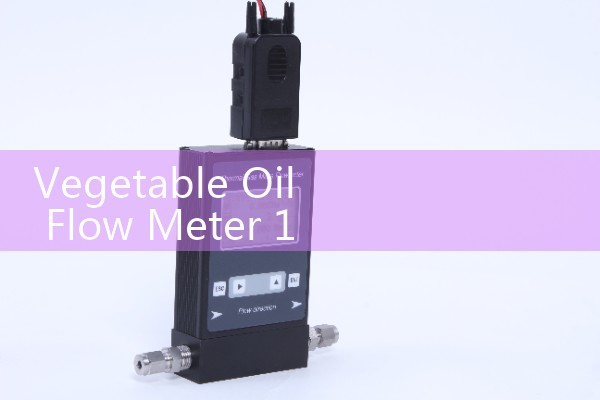
Pressure rating: up to 40 bar
Certifications: ATEX Zone 1 optional, FDA-compliant materials
Nominal size: DN15
This meter handles hot frying oil, palm oil at 70°C, and biodiesel blends without corrosion issues. The pulse scaling can be factory-set to your exact dosing requirement. Just send us the oil type, temperature, desired pulse per liter, and pipe connection.
System Setup and Installation Practices
Install the oval gear meter horizontally with the pipe filled with liquid. Place a strainer or filter with 100 micron mesh upstream to prevent particles from jamming the gears. Vegetable oil sometimes contains fines from processing. The flow meter can be installed directly in the injection skid between the pump and the static mixer. Unlike turbine or vortex meters, an oval gear meter does not require a long straight pipe run. You can mount it next to a dosing point.
For integration with a dosing controller, wire the pulse output to the controller digital input. If your controller needs analog flow rate, connect the 4-20 mA loop. Most engineers skip this part: always set a buffer or filter in the controller to smooth out instantaneous flow spikes when the pump starts. We have seen readings jump at pump startup and cause momentary overdosing.
Also include a PT100 temperature sensor in the same meter body. This allows the controller to compensate for oil density and viscosity if you dose additives based on mass rather than volume. Many edible oil additive formulas are weight-based, so temperature compensation improves accuracy.
FAQ on Vegetable Oil Flow Meter and Additive Injection
Q1: Can the oval gear meter handle hot vegetable oil up to 120°C?
Yes. The meter with PTFE gears and stainless steel housing is rated for 150°C. For continuous hot oil above 100°C, specify the high-temperature version with FKM seals and ensure the pulse transmitter electronics are away from heat.
Q2: What pipe size do I need for 10 L/min of soybean oil?
DN15 is sufficient, as the flow velocity stays below 5 m/s. For higher viscosity like cold palm oil (70 cP), DN20 reduces pressure drop. We recommend DN15 because it gives a better pulse resolution at 10 L/min.
Q3: Is this flow meter approved for food contact?
Yes. The wetted materials meet FDA and EC 1935/2004 requirements. Choose EPDM or PTFE seals and avoid brass gears. Silver Instruments provides material certificates and surface finish reports for food audits.
Q4: How do I connect the meter to a solenoid-driven injector pump?
Use the pulse output. Each pulse triggers one injection cycle. You can set the pulse per volume, for example 1 pulse per 0.05 mL, directly controlling the pump solenoid. This avoids analog signal noise.
Q5: Do I need an explosion-proof certification for an additive injection skid?
Many vegetable oil processing areas are not classified. But if you inject solvents or ethanol-based additives, the area may require ATEX Zone 2 or Zone 1. Silver Instruments can supply the meter with ATEX II 2G Ex db IIC T4 certification. Ask for it during quotation.
Request a quotation: Send us your vegetable oil type, minimum and maximum flow rate (L/min), oil temperature, pipe size (DN), required output signal (pulse or 4-20 mA), and if you need food-grade or ATEX. We will propose a SILVER oval gear meter with the correct pulse scaling within one working day. Email sales at flow-meter.com.au or use the inquiry form at https://flow-meter.com.au.
 Hot Blog
 Related AD