

 Current position >About Us
CFM Meters and Anemometer HVAC Equipment: Professional Air Velocity Trackers for Air Conditioning
Quick Answer: A CFM meter with an anemometer probe gives you direct air velocity and calculated airflow in HVAC ducts, diffusers, and return air openings. Silver Automation Instruments supplies fixed and portable air velocity trackers for air conditioning service teams and facility maintenance groups. Send us your duct size, air velocity range, CFM range, and output signal needs to get a clear product recommendation.
What These HVAC Air Velocity Instruments Do
Most HVAC technicians need two values in the field. They need air velocity in meters per second or feet per minute. They also need air volume in CFM or cubic meters per hour. A CFM meter combines both functions. You enter the duct cross section, place the probe, and the meter calculates airflow on the spot.
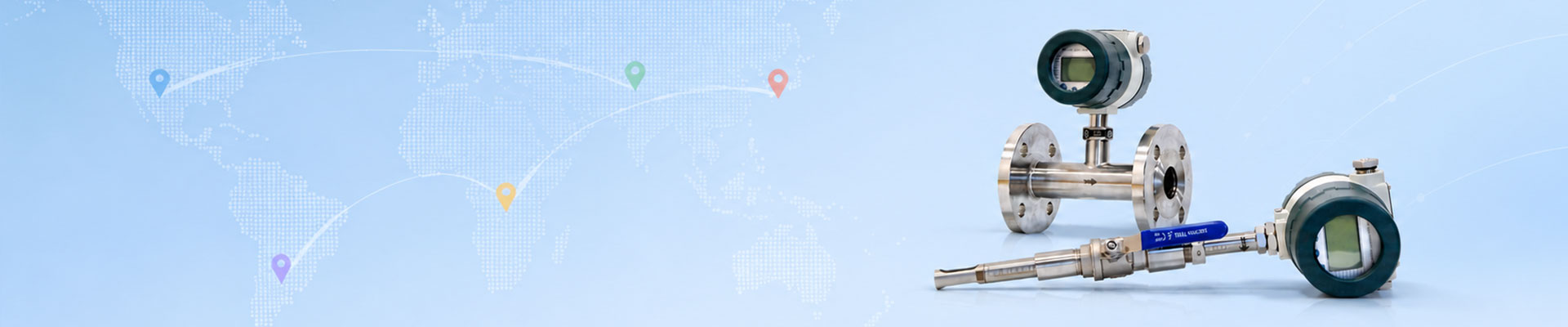
Anemometer HVAC equipment covers hot wire probes, vane probes, and differential pressure transmitters. Hot wire probes work well for low velocities in cleanrooms and laboratories. Vane probes handle supply diffusers and return grilles in commercial buildings. Fixed air velocity transmitters stay inside ducts and send continuous signals to a BMS or controller.
Portable Anemometer vs Fixed Air Velocity Transmitter
Portable CFM meters fit air balancing work. A service engineer can walk across a floor, test 30 or 40 diffusers, and log the data. We have seen a facility team in Manila check 48 supply diffusers in one shift with a hot wire CFM meter. The data logger saved each reading with a time stamp. That saved the team one full day of manual recording.
Fixed air velocity transmitters suit process HVAC and environmental monitoring. A food storage room in Doha uses a duct insertion sensor to track makeup air velocity from 0 to 20 m/s. The transmitter sends a 4-20 mA signal to the BMS. If the airflow drops below a setpoint, the building system alerts the maintenance team. No manual check is needed.
Two Recommended Models for Air Conditioning Work
The SI-200 portable hot wire CFM meter covers 0 to 25 m/s with a data logger for 16,000 readings. It works well for air balancing and HVAC commissioning. The SI-615 duct insertion transmitter handles 0 to 30 m/s with 4-20 mA and RS485 Modbus output. For BMS integration or continuous monitoring, the SI-615 is the stronger option.
How to Select an Air Velocity Tracker for Air Conditioning
Start with the duct size. Round ducts need a shorter probe. Rectangular ducts may need a longer probe or multi point measurement. For duct diameters under DN200, a standard 220 mm probe is enough. Larger ducts above DN400 need a probe length of 400 mm or more.
Next define the velocity range and required accuracy. HVAC comfort systems usually accept 0.2 m/s or 3 percent of reading. Cleanroom validation needs tighter tolerance. Then choose the output. Portable use, fixed mounting, data logging, or BMS integration are the main options.
Finally confirm the installation method. Some probes use a compression fitting. Others need a flange mount or a ball valve for hot tap insertion. In practice, most HVAC ducts allow a simple drill hole and compression fitting. Process ducts with high humidity or grease need a probe with a sealed sensor head.
Applications Where We See Repeat Orders
Our customers order CFM meters and anemometer HVAC equipment for air balancing, cleanroom monitoring, exhaust air checks, and cooling tower ventilation. A water treatment hall in Surabaya installed two fixed air velocity transmitters in the ventilation intake. They wanted a 4-20 mA signal for the local PLC. The units run 24 hours per day and need zero maintenance besides annual cleaning.
A paint booth operator in Vietnam uses a portable vane anemometer to check face velocity across filter panels. The meter calculates CFM based on du