

 Current position > Product detail
『Badger Electromagnetic Flow Meter: Sourcing M-Series Conductive Liquid Sensors』Related information(flow rotameter|digital flow meter|balo meter|hydraulic flow meter|volumetric meter|positive displacement meter|pitot tube flow meter|displacement meter|cfm meter|variable area flow meter|inline flow meter|differential pressure flow meter|calibrated flow meter|velocity meter|paddle wheel flow meter|oval gear flow meter|anemometer hvac|multiphase flow meter|doppler flow meter|thorpe tube flowmeter|heat flow meter)
Quick Answer
Silver Automation Instruments can source Badger M-Series electromagnetic flow meter sensors for conductive liquid measurement in water, wastewater, chemical, food, and marine service. We also supply compatible Silver Automation Instruments mag meters when project lead time or budget matters. Typical M-Series sensors cover DN15 to DN600, PTFE or hard rubber liners, 316L stainless steel or Hastelloy C electrodes, and 4-20 mA HART or Modbus outputs.
Sourcing Badger Electromagnetic Flow Meter M-Series Conductive Liquid Sensors
Badger M-Series electromagnetic flow meters measure conductive liquids through a magnetic field. The sensor body sits inline between flanges. Electrodes pick up the voltage generated by the fluid flow. That voltage is proportional to flow rate. M-Series units are common in raw water intake, clear water distribution, effluent discharge, sludge transfer, and chemical batching. Most engineers select this sensor family when they need stable measurement on liquids that contain solids or additives.
Because the flow tube has no moving parts, maintenance is low. A water treatment plant in Malaysia uses an M-Series mag meter on polymer dosing lines. Another customer in Chile uses one on seawater lift pumps at a small desalination plant. The key requirement is liquid conductivity. Many M-Series sensors need at least 5 µS/cm. Demineralized water and some oils fall below this limit and need a different meter type.
Key Specifications Engineers Ask About
Pipe size matters first. M-Series sensors appear in DN15 to DN600, with larger sizes available on request. The liner depends on the fluid. PTFE suits aggressive acids and caustic. Hard rubber handles water and wastewater slurries. Electrodes are commonly 316L stainless steel for potable water. For seawater, chlorides, or acids, Hastelloy C or titanium is a better choice. Standard operating pressure is often PN16 to PN40. Process temperature ranges from -10 °C to 80 °C for hard rubber and higher for PTFE. Output cards usually include 4-20 mA HART, pulse, and Modbus RTU. Accuracy is around ±0.3% of reading for most M-Series models when the pipe stays full and flow velocity is above 0.3 m/s.
We have seen customer sites skip the conductivity check. Then the meter reads zero or the output floats. Check the µS/cm value before you ask for a quote. That step saves time.
Sourcing Original Badger M-Series vs Compatible Silver Automation Instruments Mag Meters
Original Badger M-Series sensors are well known in water and wastewater networks. Sourcing can be slow when the model is not in local stock. Lead times of 6 to 12 weeks are normal for some sizes. Silver Automation Instruments has two paths. We can quote the original Badger M-Series sensor for your project. We can also quote a Silver Automation Instruments electromagnetic flow meter that matches the flange standard, liner, electrode material, and signal output. Many customers in Vietnam and Nigeria choose the second path when a plant shutdown date is fixed.
Here is the thing. A replacement does not always require a full p
Common Industry Applications in Our Service Regions
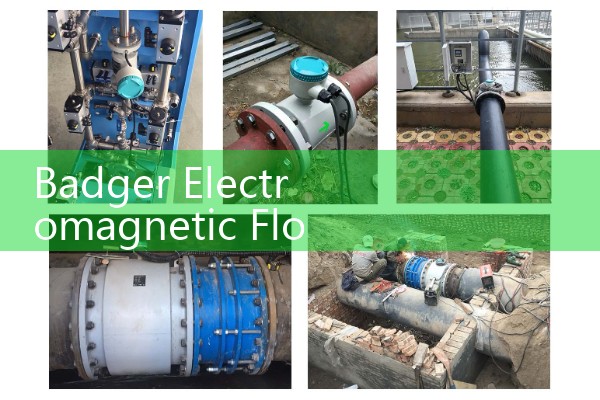
Our biggest demand comes from water and wastewater plants in Australia, Indonesia, and the Philippines. M-Series sensors measure raw sewage lift stations, filter backwash lines, and chemical dosing. In the Middle East, we see requests for brine and seawater flow meters for desalination plants. In Latin America, mining sites use mag meters on tailings slurry and reclaim water. Food and beverage plants in Southeast Asia measure CIP return lines, juice transfer, and clean water batching. For edible oils or fats, the meter works only if the liquid has enough conductivity. Most pure oils do not.
How to Specify a Badger M-Series Sensor for a Quote
Send us the process data in a short email or WhatsApp message. Include pipe size in DN, flow range in m3/h, pressure in bar, temperature in °C, and liquid conductivity in µS/cm. Tell us if the fluid is seawater, sludge, acid, caustic, or food product. The liner and electrode selection changes with this information.
You can reach Silver Automation Instruments at Tel: +86-25-68650347, WhatsApp: +86-25-52155837, or WeChat: +86 15365082610. We answer sourcing questions from distributors and end users in English, Spanish, Arabic, and Portuguese.
Visit flow-meter.com.au for electromagnetic flow meter specifications and model cross reference data.
FAQ: Badger M-Series Conductive Liquid Sensor Sourcing
What is the minimum conductivity for a Badger M-Series electromagnetic flow meter?
Most M-Series sensors require liquid conductivity of at least 5 µS/cm. Some models need 20 µS/cm for remote mounting or long signal cables. Confirm the process value before you order.
Can Silver Automation Instruments supply Badger M-Series sensors outside the United States?
Yes. We supply original Badger M-Series sensors and compatible Silver Automation Instruments mag meters to customers in Southeast Asia, Oceania, Latin America, Africa, and the Middle East.
What liner and electrode materials work for seawater and chemical dosing?
For seawater and brine, choose Hastelloy C or titanium electrodes with PTFE or hard rubber liners. For acids and caustic, PTFE liners with Hastelloy C electrodes usually give the longest service life.
How long is the lead time for a Badger M-Series sensor compared with a compatible Silver Automation Instruments mag meter?
Original M-Series sensors can take 6 to 12 weeks depending on the size. Many compatible Silver Automation Instruments mag meters ship in 2 to 4 weeks with the same flange standard and output signal.
What information do you need to prepare a quote?
Send us pipe size (DN), flow range (m3/h), pressure (bar), temperature (°C), fluid name, conductivity (µS/cm), and the required output signal. We will return a sourcing option and price.