

 Current position > Product detail
『Uro Flow Meter: Clinical Urinary Volumetric Diagnostics Equipment』Related information(flow rotameter|digital flow meter|balo meter|hydraulic flow meter|volumetric meter|positive displacement meter|pitot tube flow meter|displacement meter|cfm meter|variable area flow meter|inline flow meter|differential pressure flow meter|calibrated flow meter|velocity meter|paddle wheel flow meter|oval gear flow meter|anemometer hvac|multiphase flow meter|doppler flow meter|thorpe tube flowmeter|heat flow meter)
Uro Flow Meter: Clinical Urinary Volumetric Diagnostics Equipment
Quick Answer: Silver Instruments supplies compact electromagnetic and ultrasonic flow sensors for integration into uroflow meters. Our sensors measure urine flow from 0.5 ml/s up to 50 ml/s with 4-20 mA HART output and materials rated for clinical sterilization. Medical device OEMs in Germany, Malaysia, and Brazil use our flow tubes to meet urodynamic accuracy standards.
A uroflow meter is a clinical diagnostic device. It records urine flow rate and voided volume during micturition. Urologists in Thailand, Nigeria, and Chile rely on these devices to screen for bladder outlet obstructions and detrusor dysfunction. But designing a compact OEM uroflow device brings one hard problem. The flow sensor must be small, repeatable, and tough enough for daily disinfection. Most industrial flow meters are too heavy and too slow for the 0.5 ml/s start of a urine stream.
Here is the thing. Electromagnetic flow sensing fits uroflow perfectly because urine has plenty of conductivity. Typical urine shows 15 mS/cm to 25 mS/cm. Our electromagnetic meters need only 5 microS/cm to trigger a stable reading. Silver Instruments mini mag meters from DN4 to DN15 handle this easily. We use a PEEK liner, 316L stainless steel electrodes, and an IP67 transmitter housing. No moving parts, no stagnation zones. That means no growth of bacteria in dead legs.
We have seen this on customer sites many times. Last year a urology device startup in Vietnam asked for a flow sensor that could run from a 12 V battery and weigh under 200 grams. We proposed our Silver Mag Mini DN6 with a 4-20 mA loop powered circuit. Total weight, including the flow tube and transmitter, was 180 grams. They now order 40 units a month for their portable uroflowmeter for rural clinics.
Another case. A diagnostic equipment maker in Brazil needed a sensor that could survive 50 cycles of vaporized hydrogen peroxide sterilization each week. Standard EPDM seals swelled after a few cycles. We switched to FFKM (perfluoroelastomer) seals and polished the electrode surface to Ra 0.4 micrometre. The sensor passed their accelerated agin
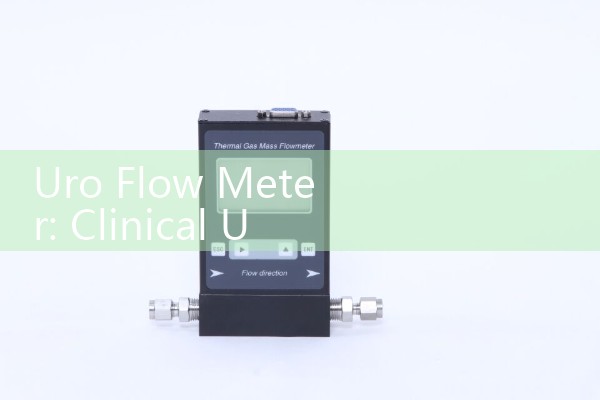
Typical performance in uroflow applications: Flow range 0.5 ml/s to 50 ml/s, accuracy plus or minus 0.5 percent of rate or plus or minus 0.05 ml/s, whichever is greater. Repeatability is 0.15 percent. Outputs can be 4-20 mA, pulse, or RS485 Modbus. Tri-Clamp connections of 1/4 inch or 3/8 inch make sensor removal quick. For benchtop units, we also offer ultrasonic clamp-on sensors that measure flow outside soft tubing. But for permanent OEM integration, electromagnetic is the safer choice because it ignores tube wall variation and temperature swings.
Send your urine flow range in ml/s, pipe size in DN, sterilization method, and required signal output to [email protected]. Call us at +86-25-68650347 or message us on WhatsApp at +86-25-52155837. WeChat users reach us at +86 15365082610. We typically reply with a sensor drawing and a compliance matrix within one working day.
Q: What is the smallest flow rate the sensor can detect in a uroflow meter? A: Our electromagnetic meters reliably detect 0.3 ml/s. The calibrated range starts at 0.5 ml/s, which is lower than the minimum voiding flow of most adults.
Q: Are wetted materials compatible with common clinical disinfectants? A: Yes. We use PEEK, 316L stainless steel, and FFKM seals. These materials withstand glutaraldehyde solutions, peracetic acid, and vaporized hydrogen peroxide.
Q: Can the sensor handle steam autoclave cycles? A: A version with a PPS housing and FFKM seals tolerates 121 degrees Celsius for 20 minutes. We recommend cleaning the electrode bore with a cotton swab after every 30 cycles to keep accuracy tight.
Q: What signal outputs are available for integration into a diagnostic console? A: Standard options are 4-20 mA (loop powered), 0 to 5 V pulse, and RS485 Modbus RTU. We can also preconfigure a HART address if your board supports it.
Q: How fast can you ship a prototype sensor for uroflow testing? A: We keep DN6 and DN10 flow tubes in stock. With a standard transmitter, prototypes ship within 5 business days from our Nanjing facility. We ship to Malaysia, Brazil, and Turkey via DHL or FedEx Priority.